Invited Speakers
Opening Session by Klaus Mølmer
We are glad to announce that Klaus Mølmer has accepted to open the scientific sessions of SPW2026

Invited Speakers
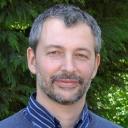
Marco Lucamarini, York University
Marco Lucamarini is Chair of Experimental Quantum Communications at the University of York, UK, and Director of Research at the York Centre for Quantum Technologies. He joined the University from a senior position in Toshiba’s Cambridge Research Laboratory,...
Marco Lucamarini is Chair of Experimental Quantum Communications at the University of York, UK, and Director of Research at the York Centre for Quantum Technologies. He joined the University from a senior position in Toshiba’s Cambridge Research Laboratory, where he conducted research into fibre-based quantum communications and implementation security of quantum key distribution systems. He contributed to bring the UK’s first quantum network into existence. More recently, he extended the range of secure quantum communications to intercity distances and high-loss communication channels through the introduction and first implementation of Twin-Field Quantum Key distribution. He has more than 20 years’ experience in quantum information theory and experiments, with over 200 research papers and patents. Since 2012 he is a member of the ETSI industry standardisation group, where he contributes to define forward-looking standards for the quantum technology.

Sergey Polyakov, NIST
Sergey Polyakov received his PhD in Optics from CREOL at the University of Central Florida. He then joined H. Jeff Kimble's group at Caltech as a postdoctoral researcher, where he pioneered the development of quantum memory in cold atomic ensembles. Sergey...
Sergey Polyakov received his PhD in Optics from CREOL at the University of Central Florida. He then joined H. Jeff Kimble's group at Caltech as a postdoctoral researcher, where he pioneered the development of quantum memory in cold atomic ensembles. Sergey spent a total of 20 years at NIST. His projects are centered on developing quantum methods for faint light metrology, with applications ranging from classical and quantum networking to quantum-enabled biophotonics. He created innovative techniques for characterizing a wide range of single-photon sources, leading to in-situ measurements of their underlying physical properties. He invented and developed a new class of optical receivers that enhance classical communications through quantum measurement. Sergey has also developed novel components for future quantum networks, including quantum-compatible optical phase tracking in metropolitan-scale fiber links. His work on the Single Photon Dictionary has advanced measurement services and pre-standardization efforts for quantum technologies. His research has resulted in over 100 peer-reviewed papers and book chapters, as well as 10 patents and patent applications.
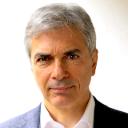
Paolo Villoresi, University of Padua
Paolo Villoresi is a Full Professor of Physics and the funding Director of the Padua Quantum Technologies Research Center, both at the University of Padova. He studied Physics and Applied Mathematics at University of Padova, where he is permanent faculty...
Paolo Villoresi is a Full Professor of Physics and the funding Director of the Padua Quantum Technologies Research Center, both at the University of Padova. He studied Physics and Applied Mathematics at University of Padova, where he is permanent faculty since 1994.
In 2003 he began experimental research in the field of quantum communications in space, obtaining funding from the University of Padua and working at the MLRO observatory of Matera of the Italian Space Agency. In over twenty years, with the QuantumFuture Research group that he founded, he has demonstrated its feasibility with various space experiments based on original techniques of Quantum Optics. The first experiments were conducted in collaboration with Anton Zeilinger, winner of the Nobel Prize in 2022. The QuantumFuture research group is also active both in fundamental research and in the applications of quantum communications in the fields of secure communications and fundamental tests of Quantum Physics. Another research line is in the generation of random numbers using discrete and continuous quantum variables, introducing new protocols and realizing them in quantum processes reaching generation rate of tens of Gbps.
Previously he conducted studies on Physics in the Attosecond domain, the generation of high-order harmonics, the multiphoton ionization, the ultrafast optics in extreme ultraviolet and X-rays domains, often exploiting adaptive optics and collaborating with the 2023 Nobel Laureates.
He has deposited 14 industrial patents and patent applications and among the founders of two companies, spinoff of University of Padua.
He has been the President of the Strategic Technical Committee of Veneto Sviluppo, nominated by the Veneto Regional Council from 2021 to 2025.
He is a fellow of the dell’Istituto Veneto di Scienze Lettere ed Arti (SCR).
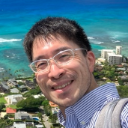
Shigehito Miki, National Institute of Information and Communications Technology
Shigehito Miki received his Ph.D. degree in Electrical Engineering from Kobe University, Japan, in 2002. After completing his doctoral studies, he joined the National Institute of Information and Communications Technology (NICT) in 2005, where he has been engaged in the research and development of superconducting strip photon detectors. He is currently the Director of the Superconductive ICT Device Laboratory at the Advanced ICT Research Institute, NICT. He leads research and development on superconducting electronic devices based on nitride superconducting films and junctions, including superconducting strip photon detectors, superconducting digital circuits, and superconducting qubits.
Masahiro Yabuno received his PhD in Engineering from Tohoku University, Japan in 2012. He then worked as a postdoctoral researcher at the Research Institute of Electrical Communication, where he investigated photon-pair generation using spontaneous parametric down-conversion and multi-photon quantum interference. In 2016, he joined the National Institute of Information and Communications Technology (NICT) as a postdoctoral researcher and began research on superconducting devices for photon detection. Since 2023, he has served as a Senior Researcher at NICT. His recent research focuses on the development of superconducting strip photon detectors with various linewidths and their applications.

Scarlett Gauthier, University of Delft
Scarlett Gauthier is the Lead Mission Engineer of the Quantum Internet Alliance (QIA). She is the project lead of the technical team working towards QIA's goal of building a European prototype quantum internet. She has recently completed work on her PhD in...
Scarlett Gauthier is the Lead Mission Engineer of the Quantum Internet Alliance (QIA). She is the project lead of the technical team working towards QIA's goal of building a European prototype quantum internet. She has recently completed work on her PhD in the Quantum Computer Science research group led by Professor Stephanie Wehner at TU Delft. Her research focuses on advancing the quantum internet through contributions to the development of the network control stack
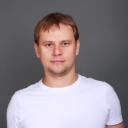
Ilya Charaev, University of Zurich
Ilya Charaev is a senior scientist specializing in superconducting sensors and quantum detection technologies. He conducted postdoctoral research at the Massachusetts Institute of Technology, working on superconducting nanowire single-photon detectors...
Ilya Charaev is a senior scientist specializing in superconducting sensors and quantum detection technologies. He conducted postdoctoral research at the Massachusetts Institute of Technology, working on superconducting nanowire single-photon detectors (SNSPDs) and related quantum sensing techniques.
His research focuses on the physics and engineering of superconducting materials and devices for the various applications such as bio/medical imaging and optical communication. Dr. Charaev has contributed to numerous pioneering experiments, including high-temperature SNSPDs, dark matter searches using superconducting nanowires, particle detection and helium ion engineering for quantum sensors.

Christine Siberhorn, University of Paderborn
Christine Silberhorn is full professor at Paderborn University and spokesperson of the Institute for Photonic Quantum Systems (PhoQS). She is best known for her work on the development of novel integrated-optical quantum devices and optical systems that lay...
Christine Silberhorn is full professor at Paderborn University and spokesperson of the Institute for Photonic Quantum Systems (PhoQS). She is best known for her work on the development of novel integrated-optical quantum devices and optical systems that lay the foundations for future quantum computers, in quantum communication and quantum metrology. She completed her PhD in 2002 at the University of Erlangen and worked as post-doctoral researcher at the University of Oxford for two years. In 2005, she became Max Planck Research Group Leader in Erlangen, until 2010. Her research has been awarded by several prizes, most prominently she received the Gottfried Wilhelm Leibniz-prize in 2011, and in 2017 she was awarded with a European Research Council Consolidator Grant. She is Fellow of Optica and of the Max Planck School of Photonics (MPSP).
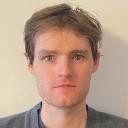
Jordan Thomas, Fermi National Accelerator Laboratory
Jordan M. Thomas is a Research Associate at Fermi National Accelerator Laboratory, where his work focuses on the development of quantum optical technologies for practical, real-world applications. He earned his Ph.D. from Northwestern University under the...
Jordan M. Thomas is a Research Associate at Fermi National Accelerator Laboratory, where his work focuses on the development of quantum optical technologies for practical, real-world applications. He earned his Ph.D. from Northwestern University under the supervision of Prof. Prem Kumar, where he investigated the optimal designs for photon sources and receivers for entanglement- and teleportation-based protocols operating in noisy environments. This work advanced the integration of quantum and classical telecommunications in optical fiber networks, including demonstrations of entanglement distribution and quantum teleportation over optical fibers carrying high-rate classical Internet traffic. At Fermilab, he has played a leading role in investigations of entangled photon source designs to enable strong filtering in noisy environments while maintaining high detection rates and photon indistinguishability for entanglement swapping. His recent research focuses on addressing challenges in long-distance quantum networking, the development of high-rate sources and single-photon detectors, and new methods for quantum sensing.
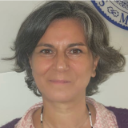
Milena D'Angelo, University of Bari
Milena D'Angelo. PhD in Physics in 2004 from the University of Maryland, Baltimore County (USA). Marie Curie fellow and post-doc at the European Laboratory for Nonlinear Spectroscopies (Florence, Italy). Since 2019 is Associate Professor in Physics of Matter...
Milena D'Angelo. PhD in Physics in 2004 from the University of Maryland, Baltimore County (USA). Marie Curie fellow and post-doc at the European Laboratory for Nonlinear Spectroscopies (Florence, Italy). Since 2019 is Associate Professor in Physics of Matter at the Physics Department of the University of Bari (Italy). She leads the Quantum Optical Technologies group and its laboratories and is one of the leading researchers in the field of quantum imaging, having implemented groundbreaking proof-of-principle experiments such as quantum optical lithography, ghost imaging with chaotic light, and correlation plenoptic imaging for 3D and hyperspectral imaging (9 patents). She is coordinating the 2nd level Master in Quantum Science and Technology and is involved in many national and European funded projects, in strict collaboration with both Accademia and Industry.
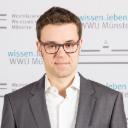
Carsten Schuck, Munster University
Carsten Schuck is a Professor for Experimental Physics and the Director of the Department for Quantum Technology at the University of Münster, where he leads the Integrated Quantum Technology group. He studied Physics in Hamburg, Uppsala and Munich and...
Carsten Schuck is a Professor for Experimental Physics and the Director of the Department for Quantum Technology at the University of Münster, where he leads the Integrated Quantum Technology group.
He studied Physics in Hamburg, Uppsala and Munich and obtained a PhD in Applied Physics from the Polytechnic University of Catalonia in 2010 for work at ICFO - The Institute of Photonic Sciences (Spain).
After a postdoctoral fellowship at Yale University and work for ASML Research he became an Assistant Professor in Münster in 2016 and Full Professor in 2021.
His research activities are carried out at the Center for Soft Nanoscience (SoN) and the Center for NanoTechnology (CeNTech), where he also acts as scientific director of the Münster Nanofabrication Facility (MNF).
He is the co-founder of Pixel Photonics, a start-up company that commercializes superconducting nanowire single-photon detectors.
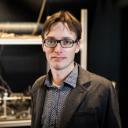
Peter Lodahl, University of Copenhagen
Peter Lodahl (PL) is professor in quantum physics and technology at the Niels Bohr Institute. He is the Director of the Danish National Research Foundation Center of Excellence Hybrid Quantum Networks (Hy-Q) and the Novo Nordisk Foundation center for Solid...
Peter Lodahl (PL) is professor in quantum physics and technology at the Niels Bohr Institute. He is the Director of the Danish National Research Foundation Center of Excellence Hybrid Quantum Networks (Hy-Q) and the Novo Nordisk Foundation center for Solid State Quantum Simulators. He is also the Founder and Chief Quantum Officer of the start-up company Sparrow Quantum that commercializes deterministic photon-emitter interfaces and today employs >50 FTEs and has successfully launched several unique quantum chip products and full plug-and-play photon source solutions. PL received a PhD in quantum physics in 2000 from University of Copenhagen and subsequently held postdoc positions at Caltech and University of Twente. He was the first to demonstrate that light emission can be fully controlled by the use of intricate photonic nanostructures. This fundamental principle ultimately enables a full deterministic quantum interface between light and matter, which PL subsequently has exploited after founding his own research group in Denmark in 2005. His group develops fundamentally new quantum hardware for the emergent field of quantum-information science such as: deterministic single-photon sources, spin-photon interfaces, and photonic quantum gates. The application areas include photonic quantum computers, quantum repeaters, and quantum key distribution towards the ultimate vision of a quantum internet.
PL is the recipient of the ERC consolidator grant (2010), ERC advanced grant (2015), ERC Synergy grant (2025), the EliteForsk Award (2016), Queen Margrethe II’s Research Award (2022), and the Into Innovation Award (2025). He has published >170 publications in leading scientific journals, given >200 invited colloquia and conference talks, holds >10 patents on photonic quantum technology, and has founded the quantum-tech start-up company Sparrow Quantum. PL has educated >35 Ph.D. students and >40 postdocs and many of them today hold highly influential positons in industry and academia. He is an elected member of the Royal Danish Academy of Sciences and Letters (2016) and Optica Fellow (2021).
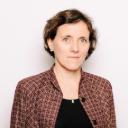
Pascale Senellart, CNRS / C2N
Pascale Senellart holds a PhD in Quantum Physics from the University of Paris VI. Appointed CNRS Research Director in 2011, she has been Professor of Quantum Mechanics at École Polytechnique since 2014, and holds an invited Professor position at the Collège...
Pascale Senellart holds a PhD in Quantum Physics from the University of Paris VI. Appointed CNRS Research Director in 2011, she has been Professor of Quantum Mechanics at École Polytechnique since 2014, and holds an invited Professor position at the Collège de France in 2025. Her pioneering work at the intersection of nanoscience and quantum optics has led to the development of quantum light sources with record-breaking efficiency. Building on this innovation, she co-founded Quandela to translate quantum technologies from research to industry, positioning herself as a key figure in the international quantum race. Pascale Senellart has received numerous distinctions, including the CNRS Silver Medal (2014), election as a Fellow ofthe Optical Society of America (2018), and the Mergier-Bourdeix Prize (2021).She is also an elected member of the French Academy of Sciences and the French Academy of Technologies.

Carl Williams, CJW Quantum
Dr. Carl J. Williams is the CEO of CJW Quantum Consulting LLC where he provides strategic advice to fortune 100 companies, small companies, and startups in the quantum technology space and supply chain companies planning to develop a quantum strategy. He...
Dr. Carl J. Williams is the CEO of CJW Quantum Consulting LLC where he provides strategic advice to fortune 100 companies, small companies, and startups in the quantum technology space and supply chain companies planning to develop a quantum strategy. He established CJW Quantum Consulting after a highly successful career at the National Institute of Standards and Technology (NIST), where he led the NIST Quantum Information Program since its establishment in 2000 and played a significant role in establishing the United States government policy that led to the National Quantum Initiative Act, including testifying before Congress. He is a Fellow of the American Physical Society and the American Association for the Advancement of Science and has won several awards over his career for both science and scientific leadership. His career accomplishments include the establishment of the Quantum Economic Development Consortium (QED-C), the establishment of the Joint Quantum Institute, major leadership leading to the 2019 Redefinition of Treaty of the Meter, and more than 120 scientific publications. He is a member of the Global Future Councils of the World Economic Forum. Dr. Williams received his B.A. from Rice University in 1981 and his Ph.D. from the University of Chicago in 1987.
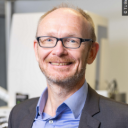
Stephan Reitzenstein, TU Berlin
Stephan Reitzenstein received a diploma and a PhD (summa cum laude) in physics from the University of Würzburg, Germany, in 2000 and 2005, respectively. In 2010, he completed his habilitation studies on the optical properties of low-dimensional semiconductor...
Stephan Reitzenstein received a diploma and a PhD (summa cum laude) in physics from the University of Würzburg, Germany, in 2000 and 2005, respectively. In 2010, he completed his habilitation studies on the optical properties of low-dimensional semiconductor systems. Since September 2011, he has been a full professor at the Technical University of Berlin, Germany, holding the chair of Optoelectronics and Quantum Devices. In 2014, he received a prestigious ERC Consolidator Grant for his work on the external quantum control of nanophotonic systems. Since January 2016, he has been Director of the Center of Nanophotonics at TU Berlin. His current research interests lie in quantum nanophotonics, particularly the development of quantum light sources relevant to applications based on semiconductor quantum dots.
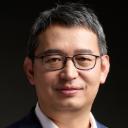
Lixing You, SIMIT
Lixing You is a Distinguished Research Fellow and Deputy Director of the Shanghai Institute of Microsystem and Information Technology, Chinese Academy of Sciences (SIMIT-CAS). His research focuses on superconducting sensors and detectors (such as SSPD and...
Lixing You is a Distinguished Research Fellow and Deputy Director of the Shanghai Institute of Microsystem and Information Technology, Chinese Academy of Sciences (SIMIT-CAS). His research focuses on superconducting sensors and detectors (such as SSPD and SQUID) and their applications. He also founded PHOTEC to commercialize SSPD technologies.
Dr. Lixing You obtained his B.S., M.S., and Ph.D. degrees from Nanjing University, China, in 1997, 2001, and 2003, respectively. He has worked at renowned universities and research institutes, including Tohoku University in Japan, Chalmers University of Technology in Sweden, the University of Twente in the Netherlands, NIST@Boulder, and the University of California, Berkeley, in the United States. Since September 2007, he has served as a Senior Researcher at SIMIT-CAS. He has published over 300 academic papers and holds positions such as Editorial Board Member for several academic journals, including Superconductor Science and Technology.
He was awarded the IEC 1906 Prize in 2018, the ESAS Award for Excellence in Applied Superconductivity in 2023, and the IEEE CSC Carl H. Rosner Entrepreneurship Award in 2025. In 2026, he was elevated to IEEE Fellow.
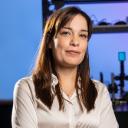
Silvia Zorzetti, Fermi National Accelerator Laboratory
Silvia Zorzetti is a Principal Engineer at Fermilab and currently serves as Deputy Division Head for Fermilab's SQMS Division. She is also a Principal Investigator and Thrust Leader at the SQMS Research Center. Silvia pursued her graduate studies at the...
Silvia Zorzetti is a Principal Engineer at Fermilab and currently serves as Deputy Division Head for Fermilab's SQMS Division. She is also a Principal Investigator and Thrust Leader at the SQMS Research Center. Silvia pursued her graduate studies at the University of Pisa in Italy and was a Marie Curie Fellow at CERN, where she carried out her doctoral research. In 2017, Silvia joined Fermilab as a Bardeen Fellow. In 2023, she received the DOE Early Career Award for her research in quantum transduction. She actively mentors students and interns at SQMS and holds an adjunct associate professorship at Northwestern University.

Patrick Runge, Fraunhofer HHI
Patrick Runge received the Dipl.-Ing. degree in computer science and the Ph.D. degree in electrical engineering from the Technical University of Berlin, Germany, in 2005 and 2010, respectively. From 2005 to 2007, he was with the Hymite GmbH, focusing on RF...
Patrick Runge received the Dipl.-Ing. degree in computer science and the Ph.D. degree in electrical engineering from the Technical University of Berlin, Germany, in 2005 and 2010, respectively. From 2005 to 2007, he was with the Hymite GmbH, focusing on RF design and measurement of optoelectronic packages for optical communication. In 2007, he returned to the Technische Universität Berlin to pursue the Ph.D. degree, researching nonlinear effects and applications of ultralong semiconductor optical amplifiers. After completing his Ph.D., he worked from 2010 to 2011 for a patent attorney. Since 2011, he has been with the Fraunhofer Heinrich Hertz Institute (HHI), where he specializes in the development and fabrication of photodetectors and photonic integrated circuits based on InP. Currently, he serves as the head of the InP & RF department and leads the Modulators & Detector group at HHI. Since 2020, he is an associate editor for IEEE/Optica.

Fabio Sciarrino, Sapienza University of Rome
Fabio Sciarrino is Principal Investigator of the Quantum Information Lab, Department of Physics, Sapienza University of Rome. His main expertise is experimental quantum optics, computation and quantum information, and foundations of quantum mechanics. Since...
Fabio Sciarrino is Principal Investigator of the Quantum Information Lab, Department of Physics, Sapienza University of Rome. His main expertise is experimental quantum optics, computation and quantum information, and foundations of quantum mechanics. Since January 2024 he is the coordinator of European Project EPIQUE (European Photonic Quantum Computer). He is leader of the Spoke "Photonic Platform for Quantum Technologies" of the Italian National Quantum Science and Technology Institute (www.nqsti.iit).
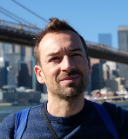
Matteo Perenzoni, Sony Semiconductor Solutions - Sony Europe Ltd
Matteo Perenzoni works as analog IC design team leader at the Europe Technology Development Center of Sony Semiconductor Solutions Europe. He graduated in Electrical Engineering from the University of Padova and received his PhD in Physics at the University...
Matteo Perenzoni works as analog IC design team leader at the Europe Technology Development Center of Sony Semiconductor Solutions Europe. He graduated in Electrical Engineering from the University of Padova and received his PhD in Physics at the University of Ferrara. Matteo started his career in 2004 first as a researcher and then as team leader in Fondazione Bruno Kessler in the field of CMOS imaging, single-photon and multispectral sensors, before joining Sony in 2021. Over the years, he has been teaching courses at the University of Trento, visiting researcher at TU Delft, and TPC member of ESSCIRC, ISSCC and VLSI conferences. His main interests are in single photon imaging and sensing using SPAD devices.