About Naples
Companion Program
Napoli lies in one of the most beautiful parts of Italy, known throughout the world for both its natural and artistic beauty. The list of the main sight-seeing tours would too be long to be included in this page. Here are some suggestive examples: the local organization can assist the participants in their choices through the travel agency Flag srl | Flagtours.
The city of Naples
· Royal Palace, San Carlo Opera House and walk around Piazza Plebiscito area
See the main highlights and wonderful hidden gems of the city of Naples around its main square, Piazza del Plebiscito. You can visit the stunning Royal Palace and the exterior of the Basilica Reale Pontificia San Francesco da Paola, then you can visit the San Carlo Opera House. Also, admire the castle Maschio Angioino (Castel Nuovo) and its imposing Arch of Triumph. Walk through the Umberto I shopping gallery with its iconic domes and the glass-vaulted arcades.
For more info visit the websites:
RoyalPalace https://www.campaniartecard.it/tour-item/palazzo-reale-di-napoli/?lang=en
San Carlo Opera House https://www.teatrosancarlo.it/en/
Naples Historical Centre: Santa Chiara Monumental Complex and San Lorenzo Maggiore
You can walk through the alleys of the city and visit the most beautiful churches in Naples, cultural heritage of UNESCO. You can see the baroque forms of the Gesù Nuovo church and the convent of Santa Chiara, with its beautiful majolica cloister redesigned during the 1700s by the Neapolitan architect Domenico Vaccaro. Here you can stroll in the shade of its arcade, admiring the extraordinary medieval frescoes. You can then walk to the alley of San Gregorio Armeno, to visit the artisan shops and see the famous Neapolitan cribs. Finally, you can visit the monumental complex of San Lorenzo Maggiore, visiting "Neapolis Sotterrata" the underground archeological area of the Roman market, and the magnificently frescoed halls of the convent.
For more info visit the websites: Santa Chiara https://www.monasterodisantachiara.it/english/
San Lorenzo Maggiore https://www.laneapolissotterrata.it/en/home-ing/
· Naples Historical Centre: Museo Cappella Sansevero, San Domenico Maggiore and University Federico II
You can start your walk from Piazza San Domenico Maggiore, in the very heart of the historical centre of Napoli. You can first visit the Sansevero Chapel Museum, a jewel of the world's artistic heritage. Here, baroque creativity, beauty and mystery blend to create a unique atmosphere. With its masterpieces such as the famous Veiled Christ, renowned world over for the remarkable tissue-like quality of the marble and enigmatic creations such as the Anatomical Machines, the Sansevero Chapel admirably reflects the multi-faceted personality of its ingenious architect, Raimondo di
Sangro, seventh Prince of Sansevero. You can then walk to the Monumental Complex of San Domenico Maggiore in Naples (now the Doma Museum) one of the most important monuments in the Neapolitan historic centre, where many famous artists and philosophers left their mark. The foundation of the church dates to 1283. Since the Renaissance, it has been an important pole for the city's history, thanks also to the choice of the Aragonese sovereigns to elevate the church of San Domenico to dynastic pantheon. Finally, you can walk to the cloister of San Marcellino e Festo, the green heart of University of Naples Federico II, which is housed in historical buildings of outstanding cultural and artistic interest.
For more info visit the websites:
Sansevero Chapel Museum https://www.museosansevero.it/en
San Domenico Maggiore https://www.campaniartecard.it/tour-item/doma-complesso-monumentale-san-domenico-maggiore/?lang=en
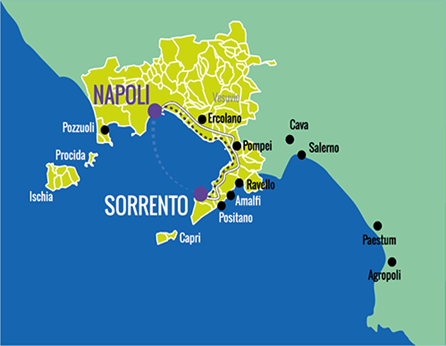
Figure 12 Naples and other spots of interest in the area: Capri, Ischia and Procida (between 30 and 50 minutes), Ercolano and Pompeii (20 and 40 minutes) the Sorrento Peninsula (about one hour), Positano and the Amalfi Coast (just over one hour).
Capri Island
Capri is an island located in the Tyrrhenian Sea off the Sorrento Peninsula, on the south side of the Gulf of Naples in the Campania region of Italy. The main town of Capri that is located on the island shares the name. It has been a resort since the time of the Roman Republic. Some of the main features of the island include the Marina Piccola (the little harbour), the Belvedere of Tragara (a high panoramic promenade lined with villas), the limestone crags called sea stacks that project above the sea (the faraglioni), the town of Anacapri, the Blue Grotto (Grotta Azzurra), the ruins of
the Imperial Roman villas, and the vistas of various towns surrounding the Island of Capri including Positano, Amalfi, Ravello, Sorrento and Nerano. For more info visit the website: https://www.capritourism.com/
Pompeii ruins tour
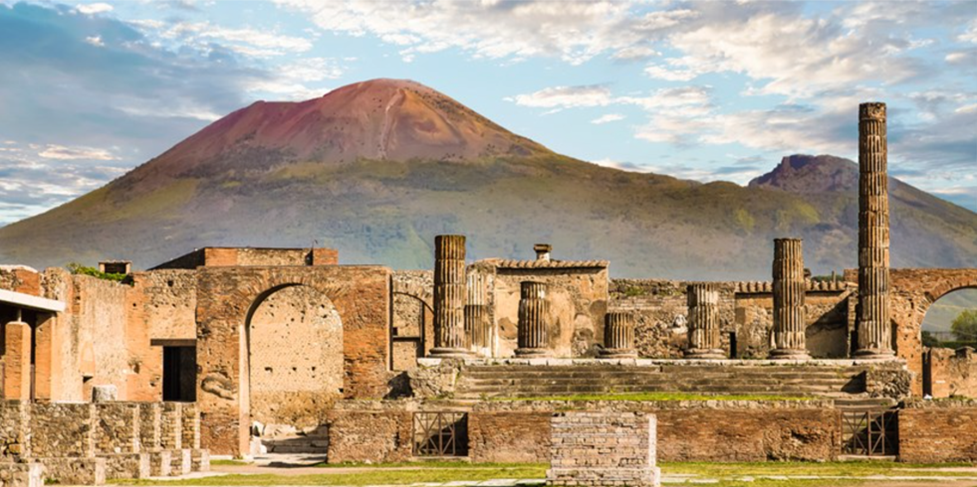
Learn about daily life and the people who once lived in this thriving market town. Many of the landmarks of Pompeii are remarkably well-preserved after being buried by volcanic ash for nearly two millennia. See Pompeii's ancient piazza and Forum, where business dealings, elections, speeches and processions would have played out during Roman times. Continue onward to the thermal baths, where citizens would have bathed, chatted and lived out their daily lives before the eruption. Visit the Lupanare and the House of the Faun, covering 3000 square-meters and built sometime during the 2nd century BC. You can also admire the vineyards that have been re-created thanks to the studies and efforts of archaeobotanist and important winemakers from the region. For more info visit the website: https://pompeiisites.org/en/
Herculaneum
Ercolano is a UNESCO World Heritage Site, with the excavations of Pompeii and the villas of Oplontis. The city planning of Ercolano is similar to Pompeii. The urban layout is orthogonal, typical of ancient Greece. The most important road is the maximum Decumanus that leads to the Foro (the old main square) of the city. When you walking around this area, you will have the feeling of a real jump in time, the city allows you to have an almost real idea of the daily life of antiquity. We can visit the house of Argo, the house of Aristide, the house of the Genius and the house of the Hotel (where you can admire the sea). The thermal baths of the Forum, the gym and finally the theater with a capacity of over 2500 people are of particular interest. During the excavations, many objects related to everyday life have been found: coins, jewels of the time, objects of furniture and much more. In addition, next to the archaeological park you can also visit the MAV, or virtual museum where you can experience the daily life of Herculaneum just before the eruption of Vesuvius.
For more info visit the website: https://www.campaniartecard.it/tour-item/parco-archeologico-di-ercolano/?lang=en
Positano
One of Italy’s most well-known and picturesque tourist towns, Positano is also famous for its highly original fashion clothing in distinctive fabrics sold in many of the charming boutiques. You need to visit the little town on foot to appreciate its pretty narrow streets, pastel-coloured houses and endless steps carved out of the rock.
Amalfi
The Amalfi Drive is one of the most spectacular coastal roads in Europe and passes through some stunning scenery. Starting from Sorrento, it winds its way along the cliff edge and offers breathtaking views until it reaches Amalfi, one of the four Maritime Republics and birthplace of Flavio Gioia, the inventor of the magnetic compass. In the centre of Amalfi stands the imposing IX-century cathedral with its famous striking façade decorated with gilded XIX-century mosaics.